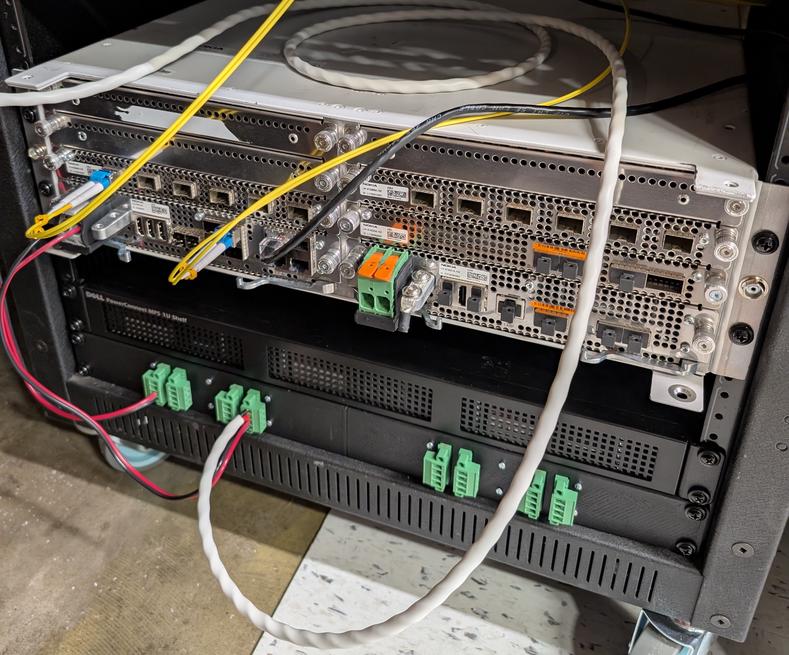
Providing 48V Rack Power#
A number of the pieces of equipment I have in my networking and cellular lab run on 48VDC. 48VDC (specifically -48V) power is common in the telecommunications industry and is inherited from the original POTS telephone network that worked based on -48VDC sourced from the common battery in the exchange. Negative 48VDC (or positive ground) was selected by Bell when it was found to reduce the electrochemical reactions that destroy buried copper cables and render them useless if they get wet.
Most equipment designed to work in and around the phone system, therefore, took advantage of the available DC power and built-in battery back-up and were designed to run on DC instead of AC. This has continued to today and you will find most of even the most advanced 5G equipment run on 48VDC.
Dell MPS1000#
I had been using various 48V supplies to power equipment as needed, but wanted to find a more permanent power source that could be mounted in the rack. I came across a number of Dell MPS1000 power supplies on eBay recently for cheap and these seemed like a great option to provide 1000W at 54V (more on that later). The Dell MPS PSU modules are especially interesting because in addition to being cheap and powerful, they also can be either rack mounted indivially or up to 3 within a 1U shelf.
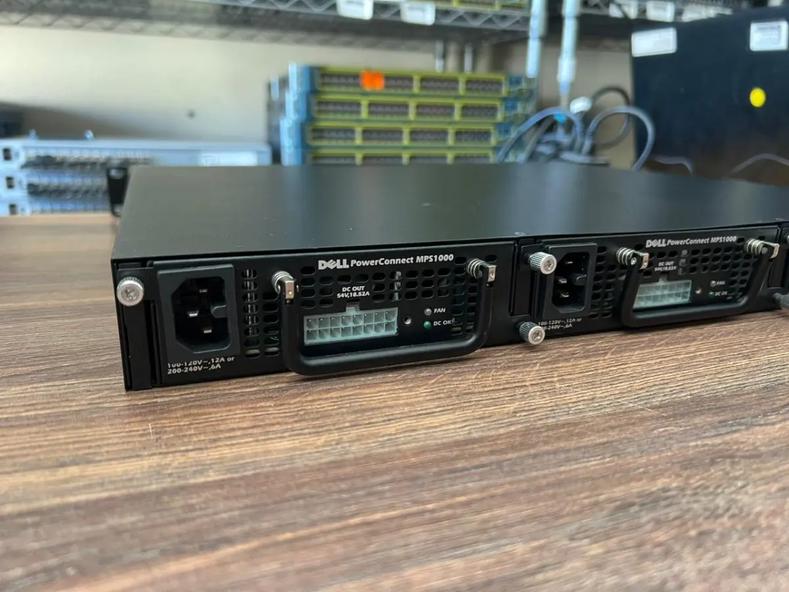
The issue is that the DC output connector is an ATX-style, 16-pin MOLEX mini-fit jr. connector with an undocumented pinout. Luckily, xunker at Junkpile Tech had the same idea and has already figured out the pinout (at least all the pins that actually matter to get voltage out of the PSU).
Adapter and Rack Mount#
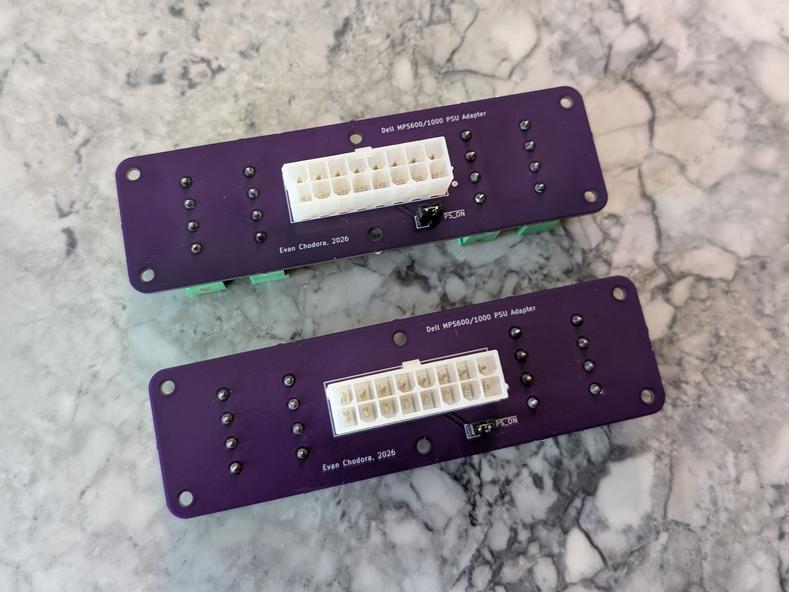
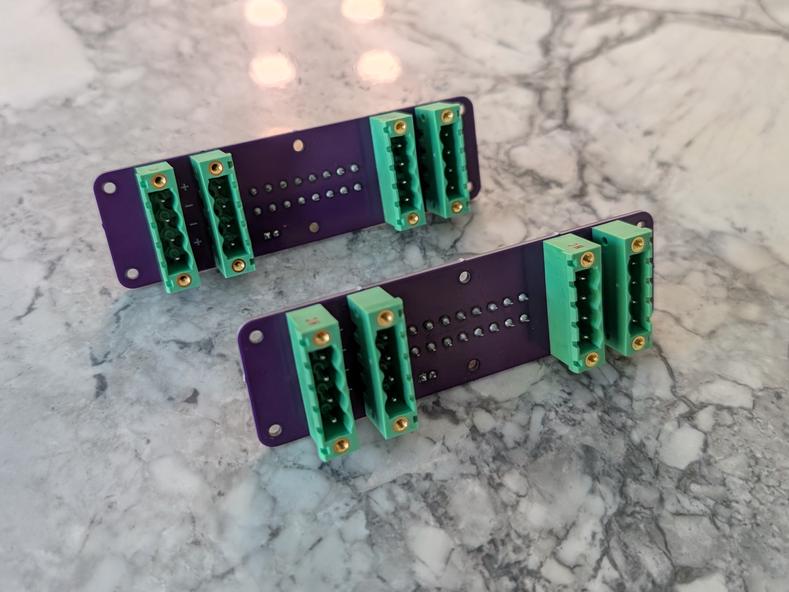
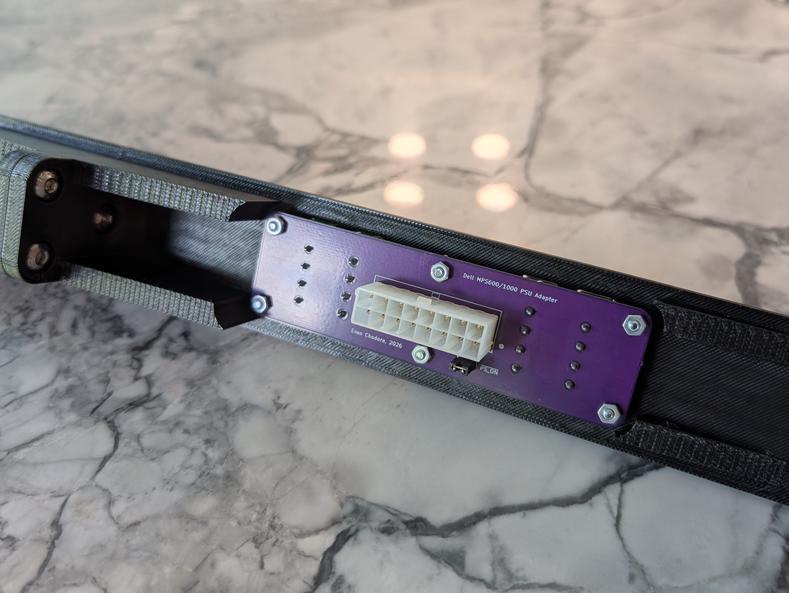
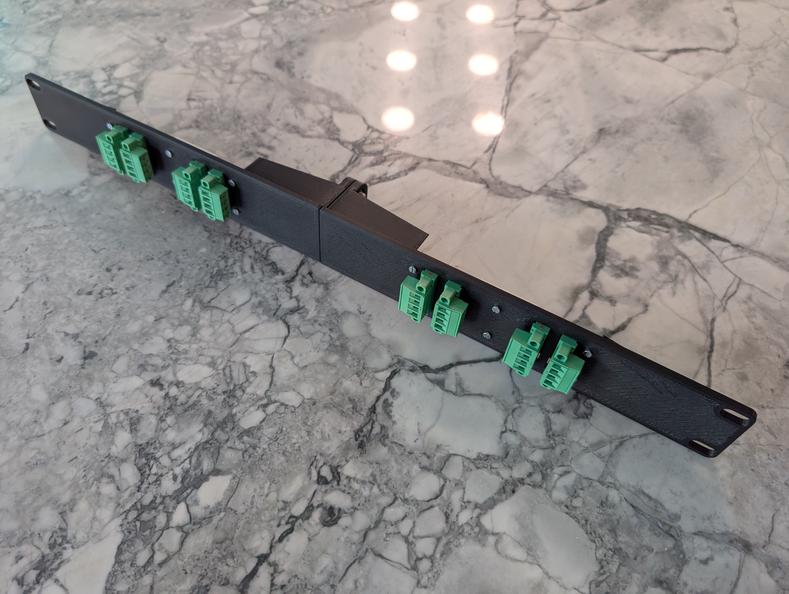
Following xunker’s pinout guide, I went about designing a PCB in KiCAD that could take the output cable from the PSU and convert it to screw terminals that could be rack-mounted to connect to various equipement in the rack. I included a jumper to ground the PS_ON pin to turn on and off the output if required.
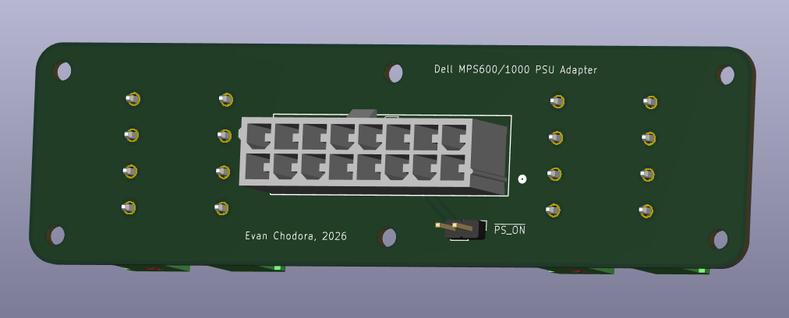
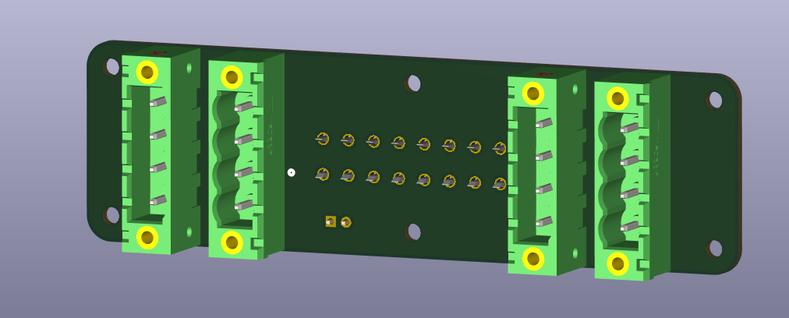
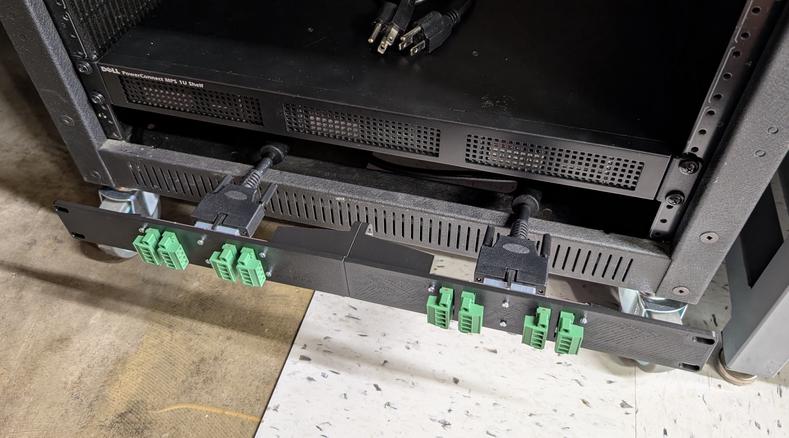
After making a quick order from Oshpark and Digikey and some 3D printing, I had a pair of boards that I could mount in the rack and power up to 2000W of equipment. The headers and terminal block connectors I chose from Phoenix Contact are good for 16A per pin so up to 864W should be able to be drawn through one pair of wires.
More details and the PCB files, CAD files, and STLs are located on my Github page.